
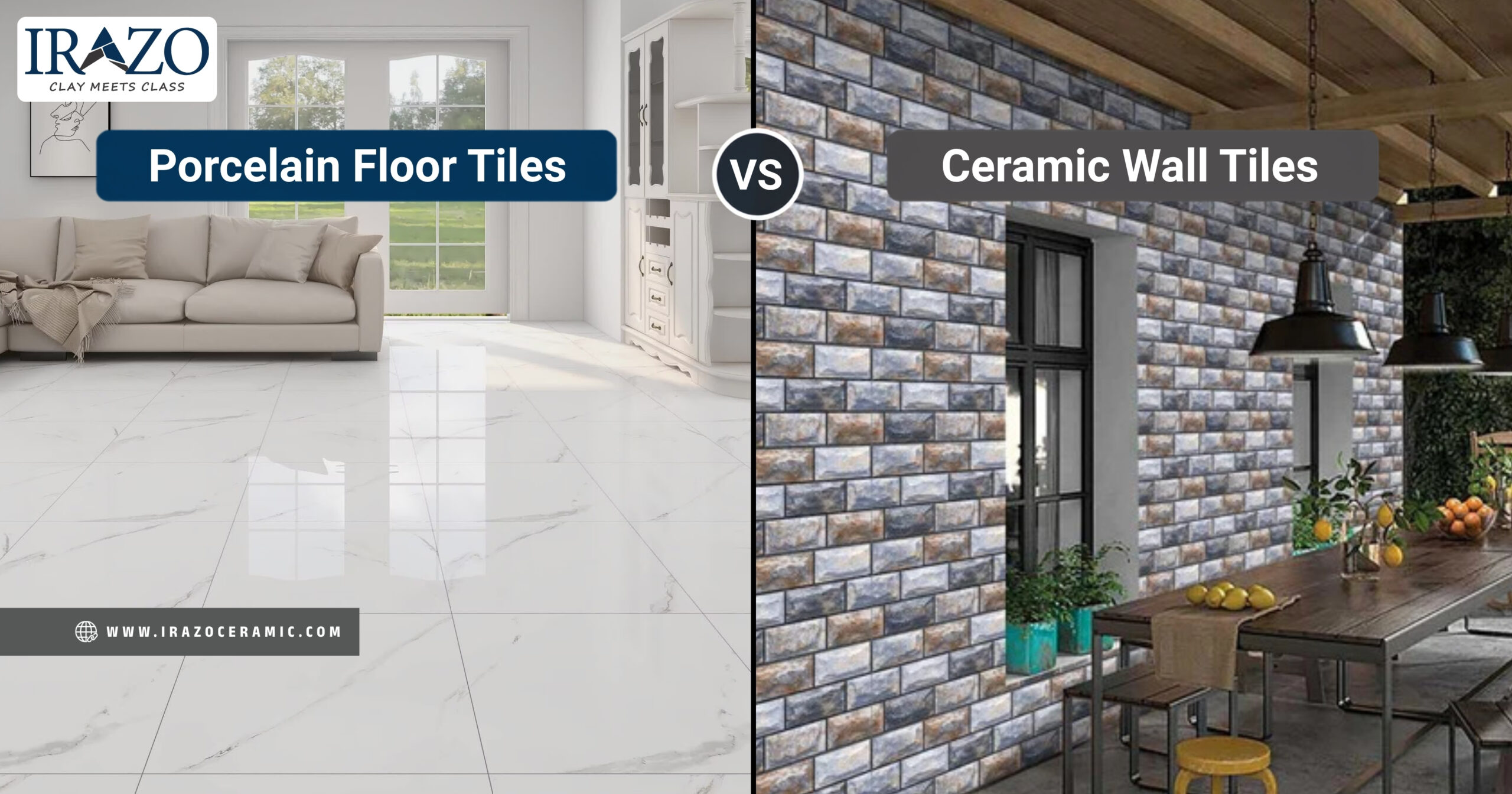
Choosing the right tiles matters for both looks and long-term performance. Porcelain floor tiles and ceramic wall tiles are popular options, but they serve different needs.
Porcelain tiles are dense, strong, and resist water well, making them ideal for floors that face heavy use. Ceramic tiles are lighter, more affordable, and easier to work with, suiting walls perfectly. This detailed guide covers every aspect — from raw materials and manufacturing to specifications, pros, cons, installation, maintenance, and real-world uses.
You will find clear comparisons and practical tips in simple language to help you decide what fits your home best. Whether planning a kitchen, bathroom, or full house, understanding these differences leads to smarter choices that last.
What Are Porcelain Floor Tiles?
Porcelain floor tiles come from a special mix of fine clay, minerals like feldspar, and other materials. Makers press this mix hard and fire it at very high temperatures, often above 1200°C. This makes the tiles very dense and strong.
Key specifications of porcelain floor tiles:
- Water absorption: Usually 0.5% or less. Water hardly goes inside, so they stay strong in wet places.
- Density and hardness: Very high. They resist scratches, chips, and heavy use. On the Mohs scale, many rate 7 or higher.
- PEI rating: Often PEI 3, 4, or 5. This means they handle moderate to heavy foot traffic well. PEI 5 works for busy areas.
- Sizes: Common ones include 60×60 cm and 60×120 cm. These large sizes give a modern, seamless look.
- Finishes: Matte, glossy, polished, textured, wood-look, stone-look, etc.
- Thickness: Usually thicker for floors, like 8-10 mm or more for heavy duty.
- Strength: High breaking strength and good resistance to wear, frost (for some outdoor types), and chemicals.
Porcelain tiles work great for floors because they take heavy walking, furniture, and spills without problems. They suit kitchens, living rooms, hallways, bathrooms, and even outdoor patios in many cases.
Why choose porcelain for floors? They last long, need little care, and keep their color and look even after years. The body of the tile often has color all the way through, so chips do not show much.
At Irazo Ceramic, you find high-quality porcelain floor tiles in 60×60 cm and 60×120 cm sizes. They use top materials and modern Italian technology for strong, beautiful tiles that fit homes and projects perfectly. Visit irazoceramic to see their collection of durable porcelain floor tiles made for real life.
What Are Ceramic Wall Tiles?
Ceramic wall tiles use a different clay mix, often coarser. Makers fire them at lower temperatures, around 1000-1100°C. This makes them lighter and easier to work with, but less dense than porcelain.
Key specifications of ceramic wall tiles:
- Water absorption: Higher, often between 0.5% to 7% or more for wall types. Glaze helps protect the surface.
- Hardness: Lower than porcelain. Good for walls where heavy wear does not happen.
- PEI rating: Usually PEI 0 to 2. These suit walls or very light floor use.
- Sizes: Many options like smaller squares or rectangles that fit walls nicely.
- Finishes: Glossy, matte, decorative patterns, vibrant colors, and designs.
- Thickness: Thinner, which makes them lighter and perfect for vertical surfaces.
- Features: Easy to cut and install. Great variety in colors and patterns for creative looks.
Ceramic tiles shine on walls because they do not need to handle heavy traffic. They work well in bathrooms, kitchens (as backsplashes), living areas, and decorative spots. They cost less and give beautiful results without extra strength needs.
Why choose ceramic for walls? They install easily, offer many design choices, and stay bright and clean with simple wiping. The glaze keeps the surface protected from moisture and stains in normal use.
Manufacturing Process: How They Differ
The way tiles are made decides their strength and use.
For porcelain: Fine clay and minerals mix into a paste. It gets pressed under high pressure. Then it fires at higher heat for longer. This process, called vitrification, makes the tile dense with low pores. Color often goes through the whole tile.
For ceramic: Coarser clay mix. Pressed, glazed, and fired at lower heat. The body stays more porous, but glaze covers the top. This allows more design variety and lower costs.
Porcelain takes more energy and better materials, so it costs more but lasts longer. Ceramic is simpler to produce in many styles.
Detailed Comparison: Porcelain Floor Tiles vs Ceramic Wall Tiles
| Feature | Porcelain Floor Tiles | Ceramic Wall Tiles |
| Durability | Excellent for heavy traffic; resists scratches, chips, and impacts well | Good for walls; may chip or wear faster on floors |
| Water Resistance | Absorbs almost no water (≤0.5%); ideal for wet areas | Absorbs more (0.5%+); relies on glaze for protection |
| Hardness (Mohs Scale) | Often 7 or higher; highly scratch-resistant | Around 5; moderate resistance |
| PEI Rating & Traffic | PEI 3–5; suitable for high traffic floors | PEI 0–2; best for walls or very light use |
| Weight | Heavier and stronger | Lighter and easier to handle on walls |
| Cutting & Installation | Needs diamond blades and more skill/professional tools | Easier to cut with basic tools; DIY-friendly |
| Cost | Higher upfront but better long-term value | Usually cheaper |
| Maintenance | Low; resists stains, minimal sealing needed | Easy to clean but may need more grout care |
| Aesthetics | Realistic stone/wood looks through the body; depth | Bright colors, varied patterns; great design flexibility |
Best Uses and Applications
Porcelain Floor Tiles:
- Kitchen floors (spills, heavy use)
- Bathroom floors and showers
- Living rooms and hallways
- Commercial spaces with traffic
- Outdoor areas (frost-resistant types)
- Parking and high-strength needs (thicker 20mm options)
Ceramic Wall Tiles:
- Bathroom walls and shower walls
- Kitchen backsplashes
- Living room accent walls
- Bedroom feature walls
- Decorative panels
Many homes mix them: porcelain on floors and ceramic on walls for balance of performance and beauty.
Pros and Cons
Porcelain Floor Tiles Pros: Extremely durable, water-resistant, versatile, long life, low maintenance, many designs.
Cons: Higher cost, heavier, harder to cut, may need pros for install.
Ceramic Wall Tiles Pros: Affordable, easy to install and cut, huge design variety, lightweight, good for vertical use.
Cons: Less durable for floors, higher water absorption, may need more care in wet areas.
Weigh these for your needs. Many choose porcelain for floors and ceramic for walls.
Conclusion
Porcelain floor tiles bring strength and longevity where you need it most — on the ground. Ceramic wall tiles offer beauty, ease, and affordability on vertical surfaces. Understanding specifications like water absorption, hardness, PEI rating, and uses helps you choose wisely.
For the best mix of quality, design, and value, consider tiles from Irazo Ceramic. Their range covers everything for floors and walls. Explore the collection, get details, and transform your spaces at irazoceramic.